Monday, January 01, 2007

New Year view

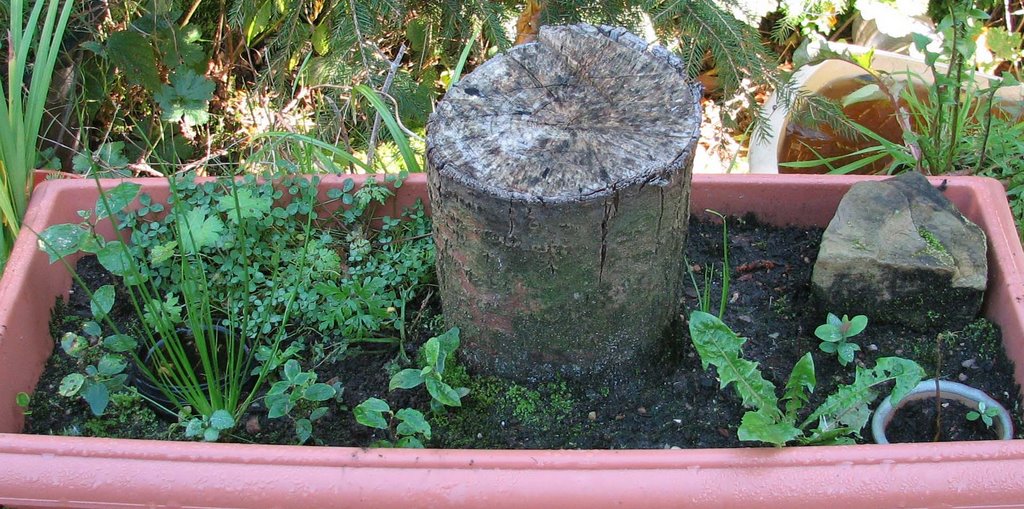
Wbx looks reasonably neat and tidy for the New Year. Almost (I tell myself) like a sink garden planted with precious and delicate alpines.

The large grass to the right of the sallow log has not been identified yet but, curiously, it is the only grass so far to appear. I thought such plants would quickly be dominant in the Wbx landscape.

Thursday, December 28, 2006

Crimson-tuber thread-moss (Bryum rubens)


In early August 2006 the small reddish moss above appeared just in front of the sallow log.

Eventually I got round to sending some to Howard Matcham,our Sussex bryophyte recorder, and he confirmed my suspicion that it was Bryum rubens. This species has small tubers on the roots, hence the English name.

I had hoped to get fruits to make identification easier, but there was some very heavy summer rain which apparently destroyed the whole colony as none has reappeared. Beaten to a pulp by rain drops and grit from the compost.

Sunday, December 17, 2006

A midwinter view


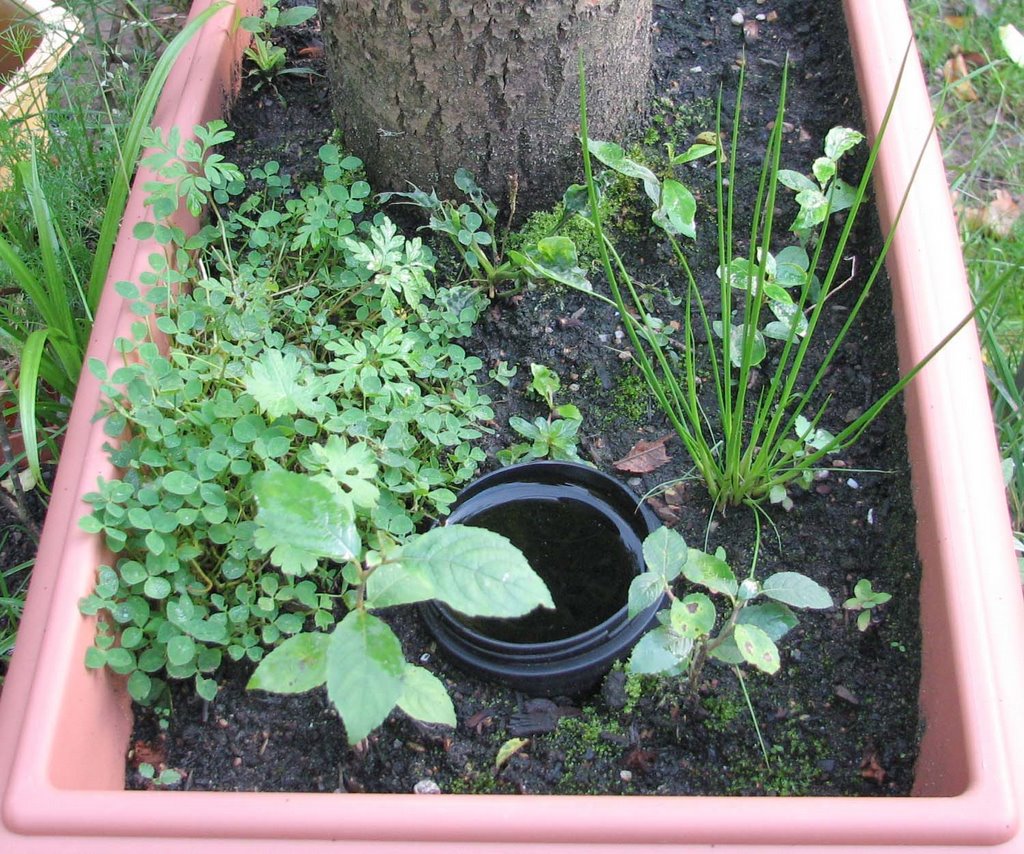
If I take the dead leaves that have blown in away, Wbx looks quite neat in these midwinter days.

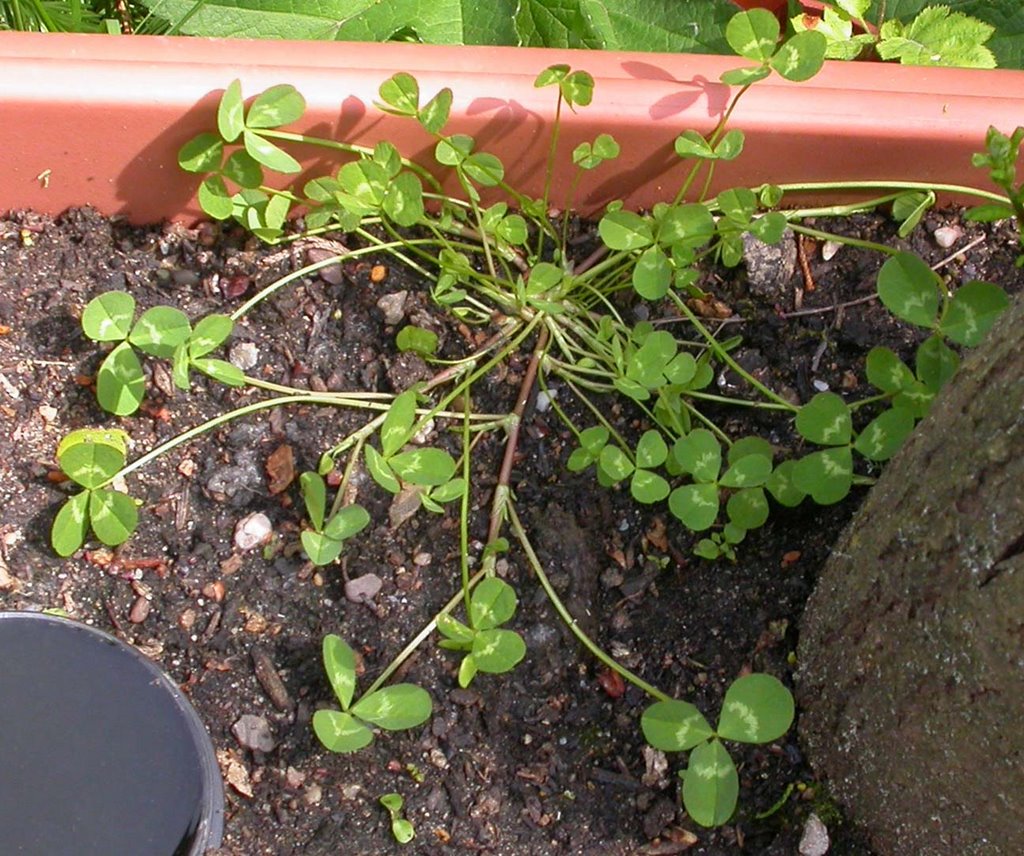
The white clover has retreated to a smaller winter version with leaves only about half the size of the summer burgeoning. This gives a chance for the two geraniums to grow.

The sunlit rush plant is, I am sure soft-rush (Juncus effusus), while over to the left by the plastic there is an alexanders seedling (Smyrnium olusatrum). Surprisingly the leaves persist on the small grey sallow plants.

Saturday, November 04, 2006

First anniversary of project


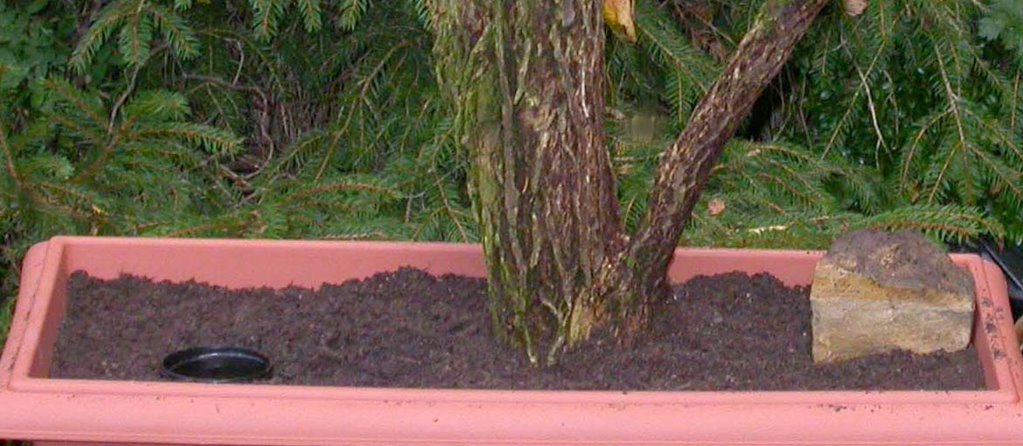
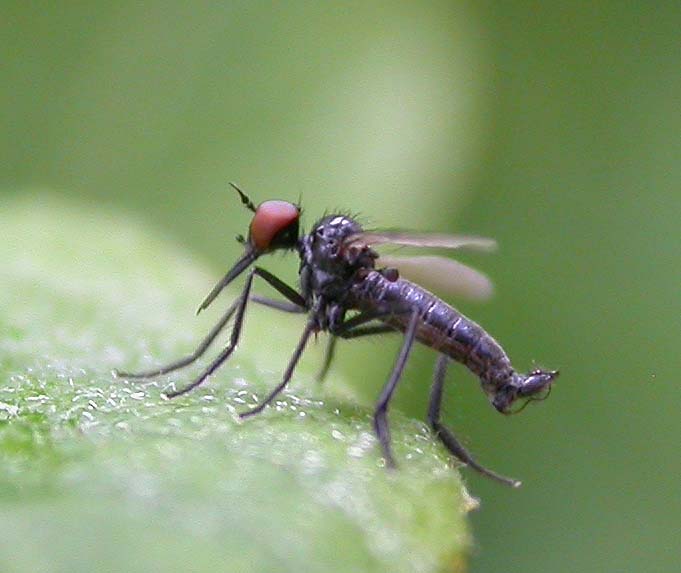
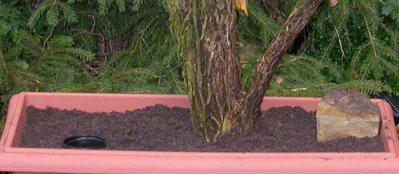
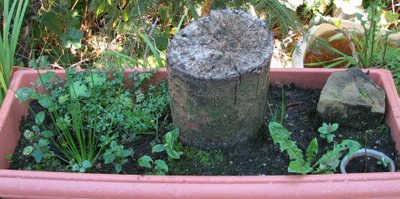
Today is the first anniversary of the project and the pictures above show how the window box was in November 2005 compared with how it is now. On my visit I noticed on the shady side of the sallow log two small resupinate fungi, a greyish white one and a pink one. These are the first fungi recorded. I also caught a short-palped cranefly, Erioptera griseipennis, resting on the bark.

Many of the naturally occurring Wbx plants of the last twelve months have clearly sown themselves from parents growing in the garden and the early appearance of species like buddleia, Leycesteria, alexanders, grey sallow, birch and tutsan demonstrates how easily these establish themselves in ‘waste ground’.

Some plants would have tended to take over if I had not controlled them. The white clover would have spread over the whole soil surface, for example, and I have had to remove the stinging nettle and several buddleias and grey sallows.

The groundsel, Senecio vulgaris, was an interesting plant. It appeared early on and grew, flowered and seeded well. Several new plants then developed from the seeds but, after attack by aphids and probably flea beetles, they went into a decline and now appear to be extinct in Wbx. A few seedlings of other species vanished before they had had a chance to get beyond the cotyledon stage and some slightly larger plants I could not identify died young.

During the very hot weather in summer the first birch seedling looked as though it was going to die, but it recovered and still carries some leaves. Elsewhere other birch seedlings have appeared.

The following species have been confirmed as occurring (nothing, of course, has been deliberately introduced):

A birch, Betula sp.
Butterfly-bush, Buddleja davidii
A crane’s-bill, Geranium sp.
Herb-robert, Geranium robertianum
Greater plantain, Plantago major
Procumbent pearlwort, Sagina procumbens
Grey willow, Salix cinerea
Groundsel, Senecio vulgaris
Stinging nettle, Urtica dioica

Tent spider, Pisaura mirabilis
A woodlouse, Porcellionides cingendus
A woodlouse, Trichoniscus pusillus
A reticulated slug, Deroceras reticulatum
A springtail, Entomobrya nivalis
A bark louse, Ectopsocus briggsi
A leaf hopper, Empoasca vitis
An aphid (on groundsel)
A flea beetle, Longitarsus flavicornis
Shining sweep moth, Psyche casta
Mosquitoes (larvae in small pool)
A moth fly, Psychoda sp.
A winter gnat, Trichocera sp.
A short-palped cranefly, probably Limonia chorea
A short-palped cranefly, Erioptera griseipennis
A non-biting midge, Bryophaenocladius xanthogyne
A non-biting midge, Gymnometriocnemus brumalis
A dance fly, Rhamphomyia longipes
A dolichopodid fly, Dolichopus griseipennis
A dolichopodid fly, Chrysotus sp.
A dolichopodid fly, Medetera truncorum
Marmalade fly, Episyrphus balteatus
A greenbottle, Eudasyphora cyanella
A flesh fly, Sarcophaga sp.
Chalcid wasps, Chalcididae (several)
European Robin, Erithacus rubecula
Common Blackbird, Turdus merula

These are those that are awaiting confirmation of identity:

A grass (one plant only)
An exotic maple, Acer sp.
A rush, Juncus sp.
A willow herb, Epilobium sp.
Alexanders, Smyrnium olusatrum
Dandelions, Taraxacum sp.
Deptford pink, Dianthus armeria
Himalayan honeysuckle, Leycesteria formosa
Tutsan, Hypericum androsaemum
Several vascular plants not even determinable to family level.
Wall screw-moss, Tortula muralis
Five or six other mosses
Two fungi

I estimate that I have seen around 60 species over this first year and there will, of course, be plenty of unseens: the creatures that settle for a while by day or night, the fauna and flora in the soil or the pond, the microscopic organisms.

Friday, October 13, 2006

A windowbox with two halves


Nearly a year after its creation, the windowbox as two different sides. To the north (top photo) there are many plant species. These include the clover lawn with two kinds of cranesbill, a greater plantain, a rush with, just to its right, what I think is a small Himalayan honeysuckle. There are several sallows and, in the bottom left hand corner a tiny birch, the one that nearly died in the summer, then recovered. The different mosses grow better on this half of the window box too.

The southern half (lower picture) has very few plants and large bare areas. The Japanese maple seems alive and well but has lost its leaves for winter as has the small wild service in its bonsai pot. A dandelion to the left grows well and what I think is a petty spurge seems okay in the centre. There is also the only grass plant so far to have colonised hard against the sallow log. Groundsel which started well and spread well, now seems to have disappeared altogether.

Why there should be a difference between the two halves I cannot explain and it will be interesting to see if it is a long term problem.

Monday, October 02, 2006

Hylemya nigrimana holed


I found an anthomyiid fly, Hylemya nigrimana, wandering rather sluggishly on the southern rim of the windowbox today. A closer look revealed a gaping cavity in the side of the abdomen from which all the contents seemed to have gone, leaving an empty shell.

This appeared as though a parasitoid might have emerged from within or maybe some creature had pierced the body with a bloodsucking mouthpart. Whatever, gruesome enough to intrigue the grandchildren.

Tuesday, September 12, 2006

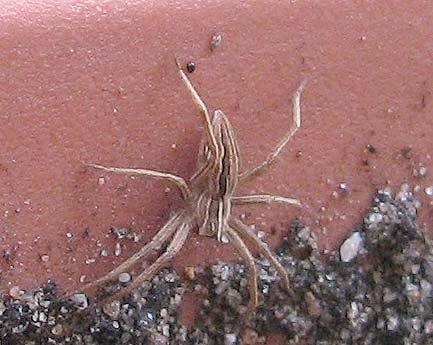
Another spider, Pisaura mirabilis


A reddish grey spider appeared on the western rim of Wbx this afternoon and posed long enough for me to get a snapshot even though light levels were very low and the sallow log in my way. It was a small specimen of Pisaura mirabilis, sometimes known asthe'nursery web spider' from the way the female guards the egg sack.

Saturday, September 09, 2006

Greater plantain,Plantago major


There is one plant of greater plantain in Wbx but, although the soil is good, it does not grow nearly as well as others of this species do on trampled gateways, lawns and so on.

The main reason seems to be is that it has been infested with aphids ever since it was very small and these have considerably distorted the leaves. There are three aphid species that live on P. major and I have not yet worked out which one this is. Despite this problem, it has managed to produce a flowering spike and will set seed.

Thursday, August 31, 2006

A mini spider and a short-palped cranefly


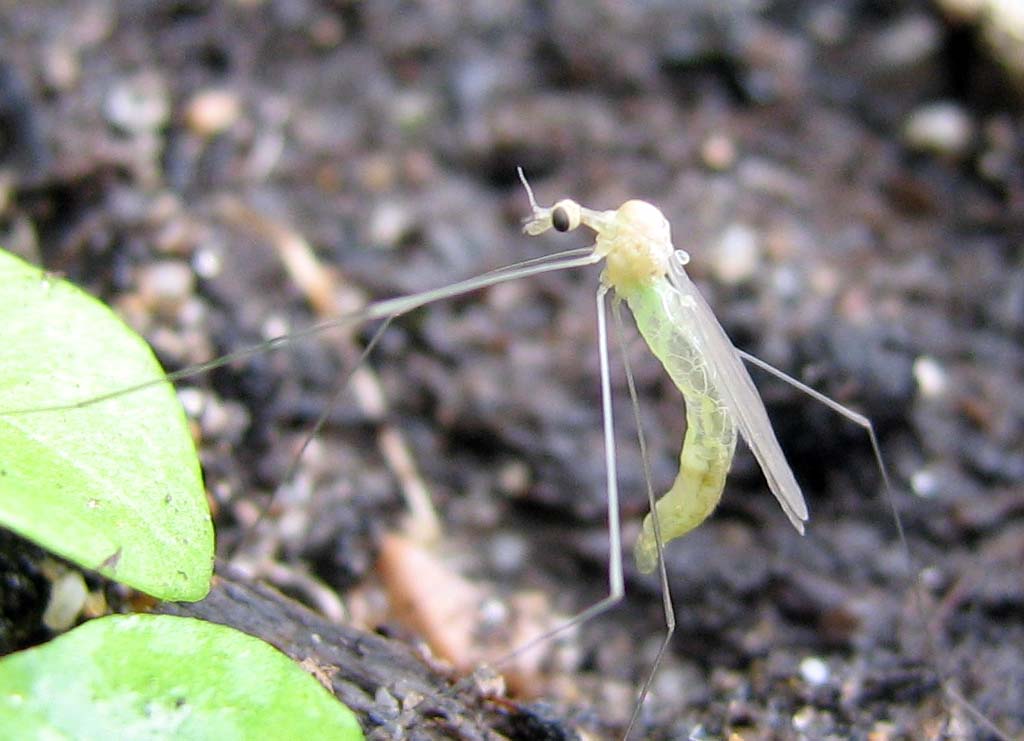
Today I found a pale,flaccid, freshly emerged short-palped cranefly, probably Limonia chorea, resting on the soil surface to harden its wings and exoskeleton generally before taking wing. Within minutes it had flown.

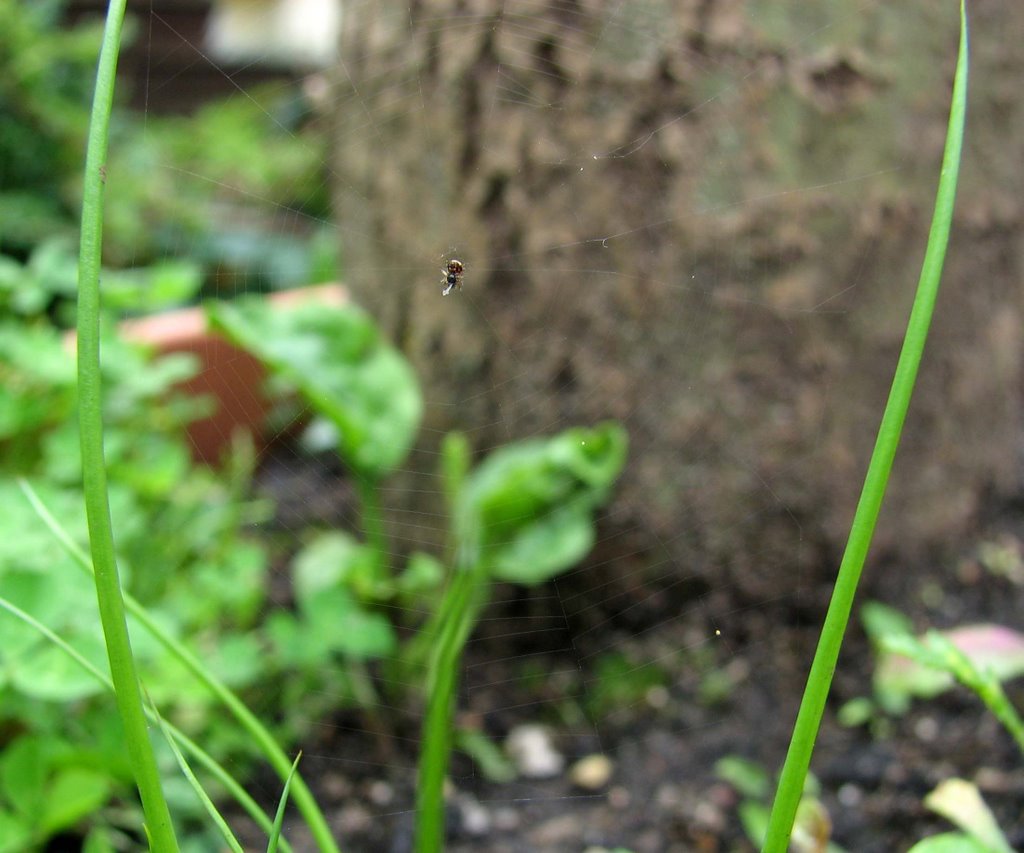
Nearby, between two leaves of a rush plant, a minute spider had spun a delicate orb web. (View the picture at full size for the detail)

Tuesday, August 29, 2006

Rain and cranesbills


The recent heavy rain has done some damage to Wbx. It splashes grit up into the plants and even seems to have killed, or buried, some of the smaller, more delicate patches of moss.

There is also an increasing difference between the two halves. Plants in the southern section often grow poorly and there are fewer of them, while most things burgeon in the northern half and there are far more species. I cannot think of any reason.

I have had to start thinning out some of the plants in order that one thing or another does not become dominant. I have put one of the buddleias in a pot and am minded to start a special collection of these thinnings as a Wbx accessory – a garden from a windowbox.

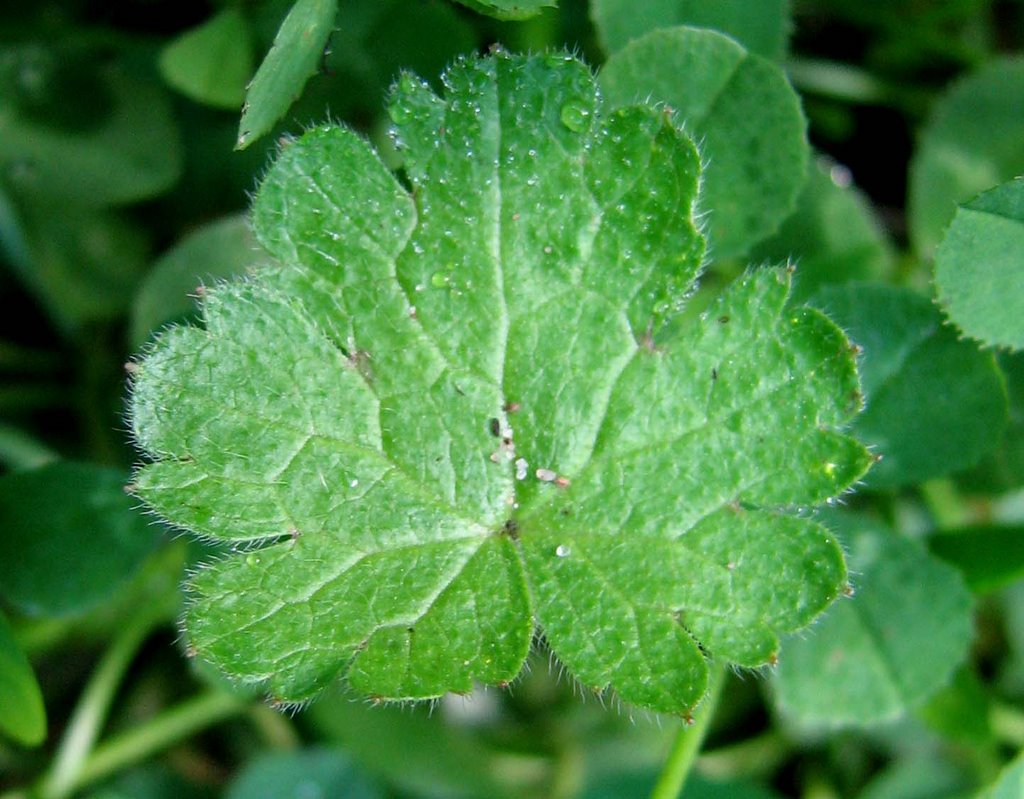
Two cranesbills have appeared in the centre of the clover lawn. One is herb robert, Geranium sanguineum; the other may be dovesfoot cranesbill, G. molle, but I will have to let it grow a bit before I can be certain. The first true leaf of this latter is pictured above.

Sunday, August 20, 2006

Nettles must go


Once again I have had to coppice the clover back to its half moon shape against the eastern edge of Wbx. The recent rains have made this plant grow remarkably vigorously.

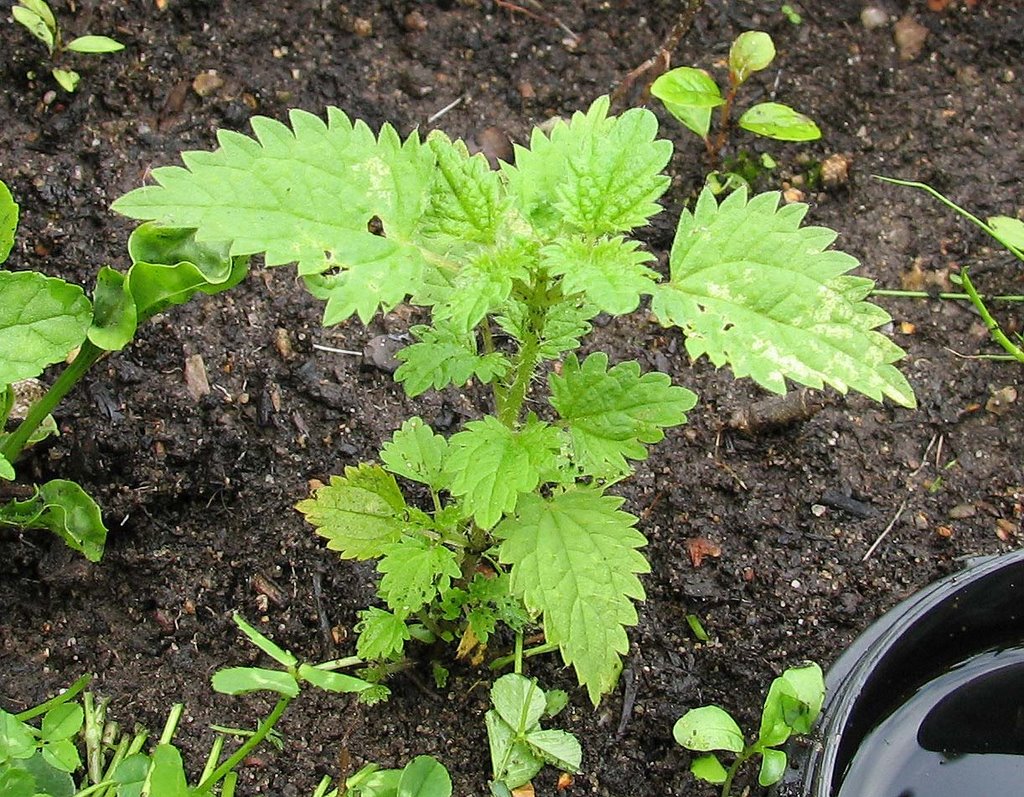
What I thought was a nettle (see above) undoubtedly is as it stung me when I was coppicing the clover. Sadly it will have to go as Wbx cannot sustain a nettle bed.

Mosses are burgeoning: a particularly attractive mini-feature is the colony of wall screw-moss, Tortula muralis, in a crevice on the sandstone rock (see also above).

Several non-descript seedlings with greyish, oval leaves are, I have decided, Buddleja davidii, the butterfly bush. This Chinese plant did not really catch on in the horticultural world until just over a century ago, but has now spread all over the country to brownfield sites and even ancient woodlands. Butterflies do like it, but perhaps there are far fewer flowers in the countryside so that plants like this in gardens and waste places are increasingly welcome.

What I thought was a grass looks increasingly like a rush, Juncus sp., but one small blade of what I think is a true grass has appeared south of the sallow log.

The small birch in the north east corner of Wbx was struggling for a while – heat stroke I suspect – and I thought it was going to die, but it seems to have recovered slightly and may make it to winter.

Saturday, August 12, 2006

Aphids on groundsel


Perhaps 50% of the seedling groundsels are not growing well, or at all, and their young leaves have turned purplish and yellow like bruises.

I pulled one up today as I thought these plantlets could be suffering some sort of fungal attack and discovered that aphids were living under the leaves. As well as weakening the plants by sucking out the sap, they may well have introduced some virus.

Several plants have not beeen affected and are growing away quickly. Maybe if this cycle continues a new, aphid-resistant strain of 'windowbox groundsel' will evolve.

Saturday, August 05, 2006

Clover lawn


1 August 2006. My need to stop the white clover smothering everything has resulted in a half-moon shaped clover lawn carefully topiarised with a pair of scissors.

There is a rapidly developing community of plants right across M3 and the groundsel has seeded itself copiously. I look on these as ‘nurses’ for other species on the basis that plants seem to grow better when they are together.

There are now several patches of moss and several species seem to be involved, but it will be some time before I feel able to sort them out.

I have removed all the epicormic shoots from the sallow log, fine though they were, as it will otherwise quickly turn into a tree and probably break out of the window box altogether.

More seedlings


22 July 2006. Much has been happening in the last few weeks. The first flowering plant, the groundsel, has shed all its seed and died, but has scattered babies everywhere on the windowbox. I will leave them for the time being as I tend to believe, à la Goethe, that plants work as ecosystems rather than as individuals.

The white clover has recovered from its fierce pruning and is spreading out again, and the sprouts from the sallow log are now longer than the log itself.

There are still many small plants I cannot identify: a seedling with purplish leaves, maybe a sow thistle (see photo); a tiny, dark green trailing plant which grows very slowly to the east of the sallow log. There is also one pearlwort, Sagina procumbens, a birchBetula and a stinging nettle, Urtica dioica (see photo). However, vegetation cover is sparse, maybe 10%, and growth of many species painfully slow.

The pearlwort is difficult to photograph, but when I did I noticed it was home to some very tiny orange aphids (see photo)

Monday, July 10, 2006

Coppicing clover


Today I coppiced the white clover, Trifolium repens, with my two-year old granddaughter as an assistant. The plant has been getting more and more rampant and was likely soon to cover the whole of Wbx and smother some of the smaller (and still very slow growing) seedlings. Several of these have only achieved a few millimetres across in many months of growth. I think I might now have eight or ten species overall, but in some cases it looks as though it could be years before I find out even though they are growing in pretty good conditions.

Anyway, I cut the whole clover plant back almost to the roots round the original seedling. I have no doubt the plant will quickly regrow again and I am making the harvested foliage into hay which I may put back on Wbx in due course.

In the last few days this clover has been producing flowers, which clinches its identity (see photo), but I am unrepentant about my trimming as I want to create as much variety and structure as I can in this small space.

Sunday, July 02, 2006

Reticulated Slug and Long-legged Fly


On a hot afternoon (30°C) a reticulated slug, Deroceras reticulatum, emerged from under the clover leaves into the bright sunshine and made its way across the soil to Orion Rock. It flowed along this upside down, then disappeared beneath. This is clearly the animal (often described as a common garden pest) that has been browsing on the clover.

Another feature of Wbx at the moment is the tiny, green, iridescent flies of the Dolichopodid genus Chrysotus. These often rest on the top of leaves in the sunshine as they search for prey.

Tuesday, June 27, 2006

The dance fly Rhamphomyia longipes


Now that summer proper is here more insects turn up in Wbx. This morning I noticed the green bottle Eudasyphora cyanella and a male of the small dancefly, Rhamphomyia longipes, which settled on a leaf from the burgeoning sallow log. As can be seen, these are predatory flies and it is in the subgenus Aclonempis mainly by virtue of its long proboscis.

The small aphid under the leaf in the top photo looks at some risk, but the fly paid no attention to it.

The species is fairly common in the British Isles and there are several records from East Sussex.

Sunday, June 18, 2006

What made the holes?


This morning there were two beak-sized holes between the sallow log and the western edge of Wbx.

One was larger than the other and both were of a conical shape that indicated they were likely to have been made by some large bird - a jackdaw or magpie maybe. It was not clear what they might have been looking for and it will be interesting to see how long they remain identifiable as holes, though I don't suppose there will be rare plants growing in them as in the grykes in limestone pavement.

Slugs or snails now appear to be getting up onto Wbx and they have started to eat the clover. Yesterday's bud has gone, so they obvioulsy made a bee-line (or slug line) for that.

Friday, June 16, 2006

White clover in bud

After some five months of growth from seed, the plant which I think is white clover, Trifolium repens, has, since Sunday, produced a bud. It looks like a green pine cone lying on the ground and will need to turn upright before the flowerlets start opening.

To one side some of the leaves have been eaten, I suspect by a slug or snail and this is the first time this has happened.

This clover has grown so well it is now covering a substantial area of Wbx and beginning to swamp some of the smaller plants. Some management will soon be necessary.

Sunday, June 11, 2006

White clover spreading

The plant that grows more rapidly and vigorously than anything else is what I think is white clover, Trifolium repens. It appeared in February and is now expanding rapidly though, unlike the groundsel, it shows no sign of flowering.

It is hot and dry every day at present, so I water the windowbox regularly with rain water. I often reflect how unlike any ‘wild’ microclimate conditions in the box are. In winter the soil freezes right through and it dries out rapidly in hot weather then gets a tropical downpour from a watering can in the evening. Nevertheless, it seems to support a range of quite common plants that grow fairly normally.