Friday, June 16, 2006

White clover in bud

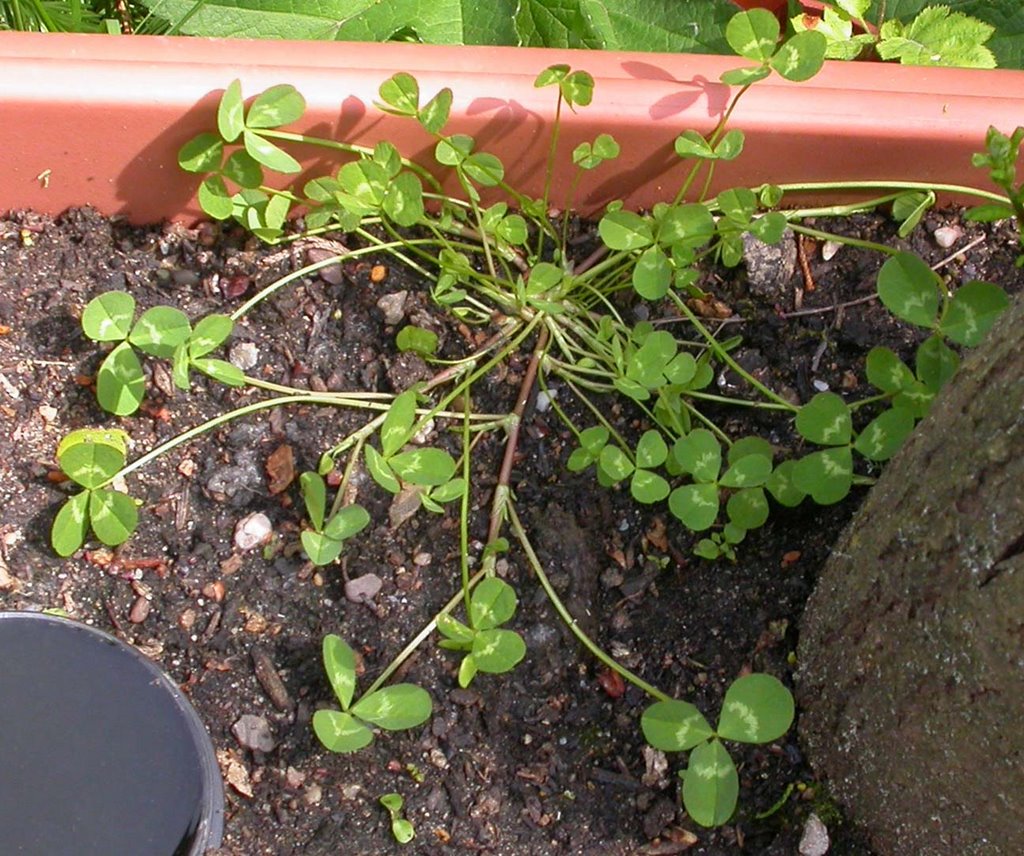
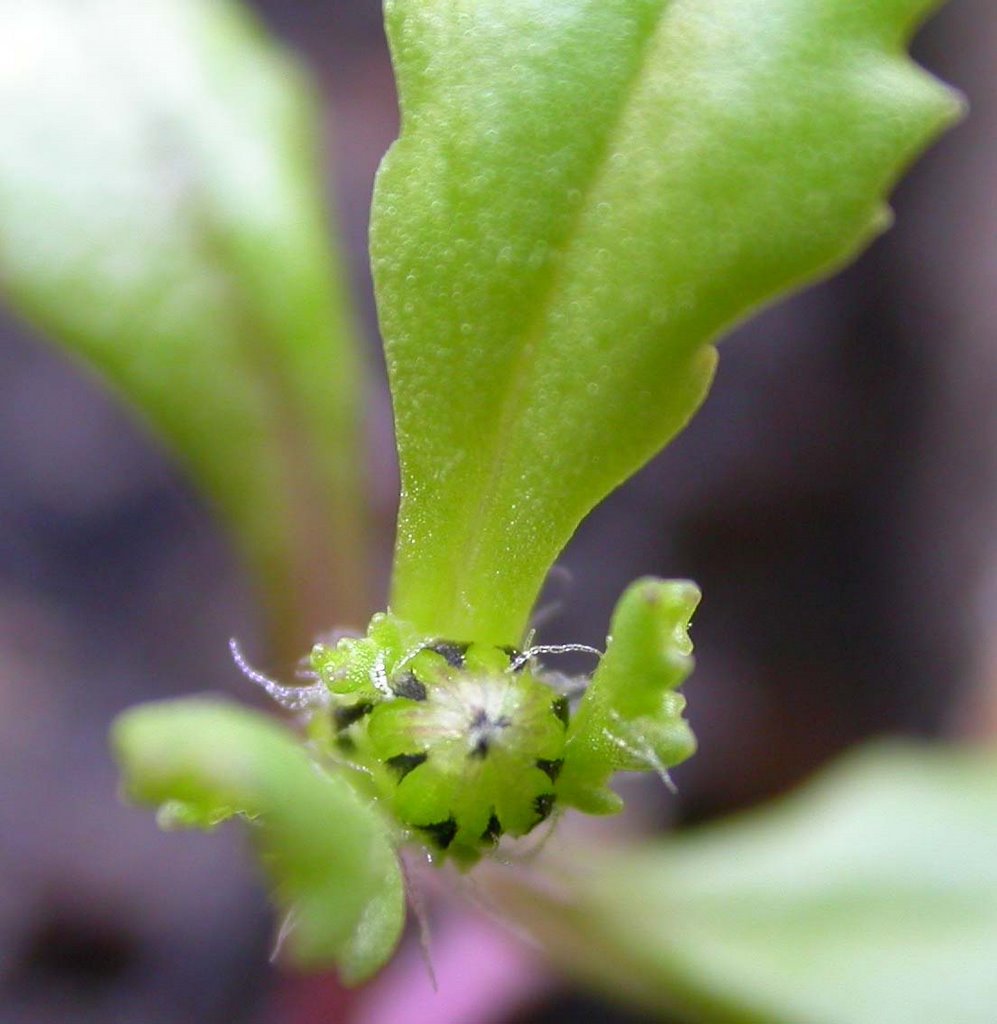
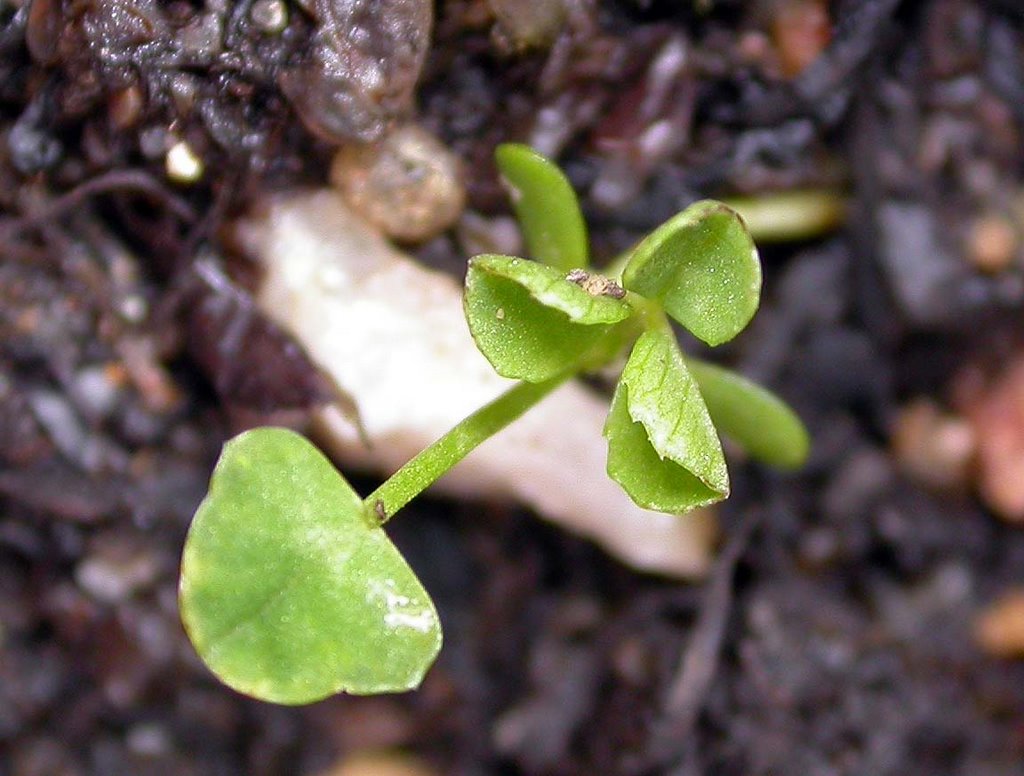
After some five months of growth from seed, the plant which I think is white clover, Trifolium repens, has, since Sunday, produced a bud. It looks like a green pine cone lying on the ground and will need to turn upright before the flowerlets start opening.

To one side some of the leaves have been eaten, I suspect by a slug or snail and this is the first time this has happened.

This clover has grown so well it is now covering a substantial area of Wbx and beginning to swamp some of the smaller plants. Some management will soon be necessary.

Sunday, June 11, 2006

White clover spreading

The plant that grows more rapidly and vigorously than anything else is what I think is white clover, Trifolium repens. It appeared in February and is now expanding rapidly though, unlike the groundsel, it shows no sign of flowering.

It is hot and dry every day at present, so I water the windowbox regularly with rain water. I often reflect how unlike any ‘wild’ microclimate conditions in the box are. In winter the soil freezes right through and it dries out rapidly in hot weather then gets a tropical downpour from a watering can in the evening. Nevertheless, it seems to support a range of quite common plants that grow fairly normally.

Groundsel, Senecio vulgaris - more seed


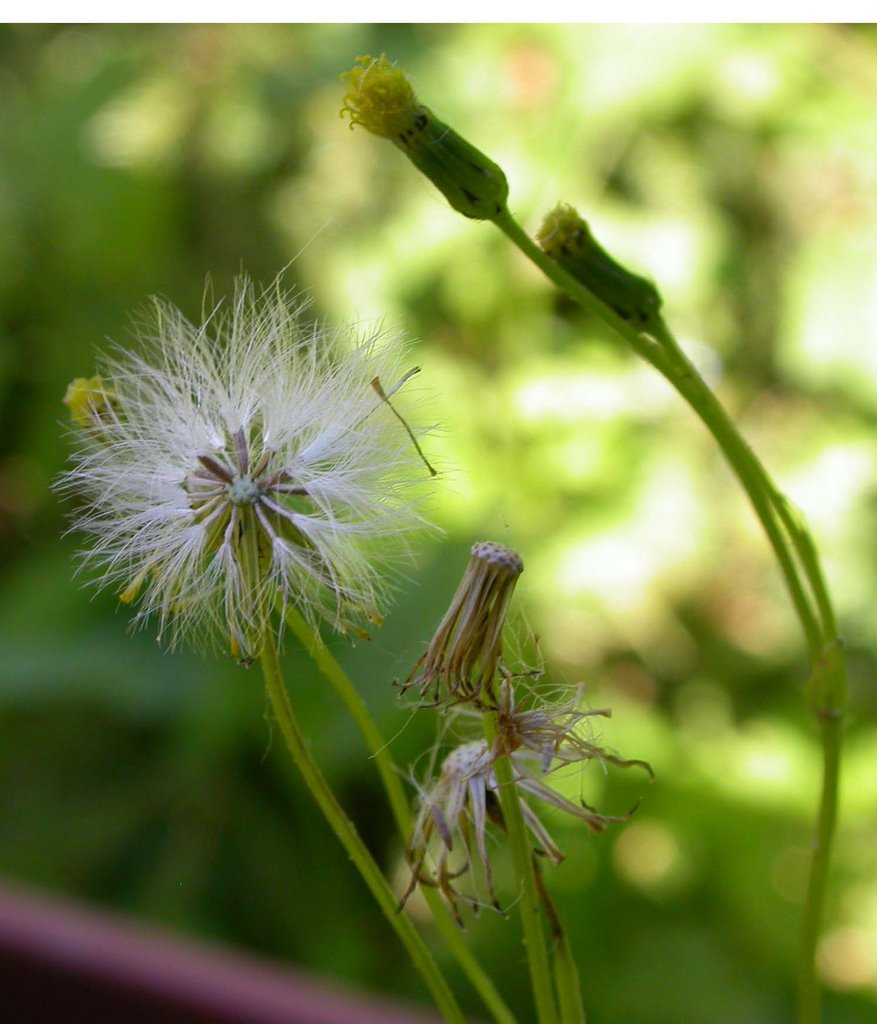
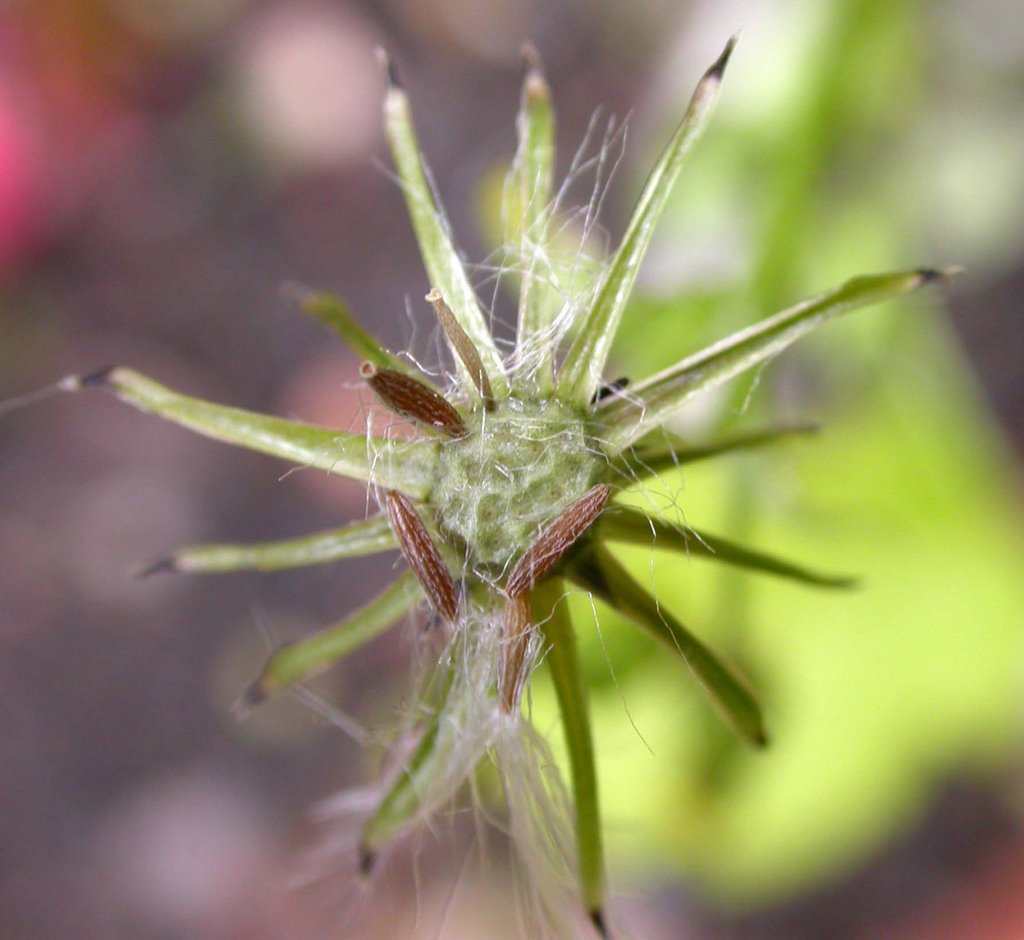
Several of the groundsel flowers have now produced seeds and I managed to photograph this one before the they all blew away in the soft summer wind.

I still cannot work out why the groundsel and the clover grew so quickly earlier in the year when it was cold, often frosty, when the numerous seedlings that have germinated since the warmer weather started are so slow in progressing during the current 'good growing weather' - they look healthy enough, just slow.

Thursday, June 08, 2006

Shooting sallow

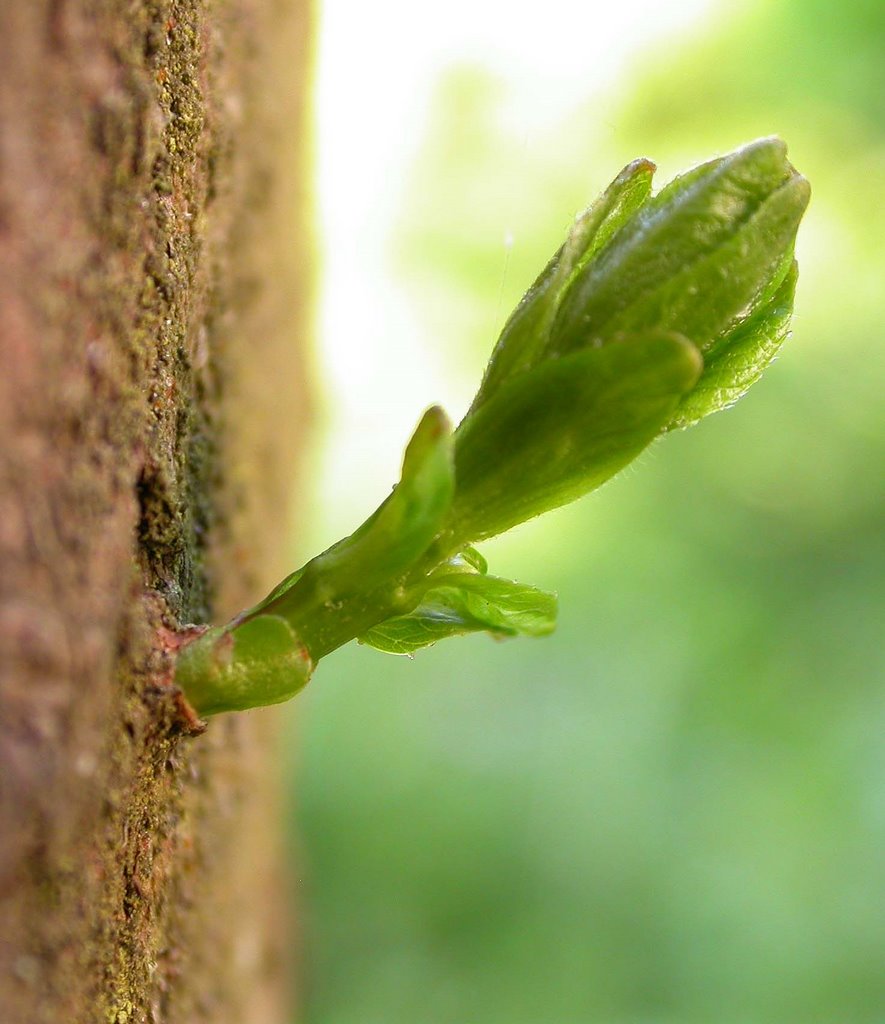
The sallow log, though planted in the windowbox upside down has produced three fat shoots, all on the north side of the log. They thrust out from the bark at an angle of 45 degrees like the arm of a green man carrying a green grenade. "Don’t mess with me, the embodiment of nature" they seem to say.

I counted the number of volunteer seedlings today – there are nearly 40 and of many different species, but they grow very slowly. I also noted a Sarcophaga flesh fly on the rim of Wbx and a rove beetle making its way towards the sandstone rock.

Thursday, June 01, 2006

The shining sweep

There are now many seedlings scattered right across Wbx and they appear to be of many different species. They are mostly very slow to grow, unlike the Trifolium and the groundsel that came up in January and early February. The groundsel has already flowered and set seed and the trefoil (white clover, I think) is starting to spread by runners.

There is also the little Japanese maple tree which, with nourishment from its seed, produced two cotyledons and two true leaves but though the cotyledons are fading now there is no sign of any further development.

Some of the patches of green scum that appeared in late winter have now turned into very small tufts of moss and in the cool, damp weather so far this summer are developing quite quickly.

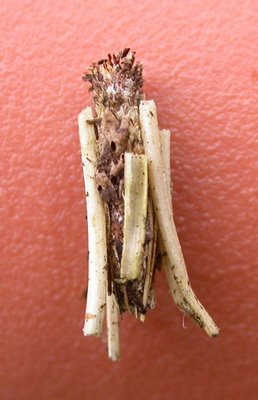
Insects continue to turn up from time to time and the latest was a larva of the shining sweep moth, Psyche casta, in its caddis-like case of dead plant stems and other bits and pieces (see picture above). These often remain in exactly the same place for months when the weather is cold, but this one which started at the southern edge of the eastern Wbx rim, had moved yesterday, about half a metre northwards, then disappeared. The males hatch out into proper little moths, but the wingless females remain in their cases.

Tuesday, May 30, 2006

The groundsel has seeded


This morning I noticed that the first seed head on the groundsel, Senecio vulgaris, the first plant to seed in Wbx, had opened like a star and spread its children upon the wind. Just a few reluctant starters were still waiting to jump. I had missed the shaving brush phase in all the recent rain and wind, but the plant seemed to have timed its moment perfectly on a breezy, sunny late May morning.

Bon voyage.

The rhythm of my title 'The groundsel has seeded' reminded me of something. Then I remembered: the line from the first voyage to the moon 'the Eagle has landed'.

Sunday, May 21, 2006

Legacy of the wind


After the gales and heavy rain of the last two days, the surface soil of the windowbox is strewn with bits of leaf, flower buds and petals. None of the plants seems to have been damaged, however, and this vegetable detritus will, I suppose, in the fullness of time, create a sort of top-dressing.

I caught a fly too. A little muscid called Coenosia tricolor. I wonder where the third colour is supposed to be.

Thursday, May 18, 2006

Cherry petals


The bird cherry shakes
in a summer gale and drifts
a snow of petals.

I find one floating on the dark waters of the Wbx pond. It reminds me of Ezra Pound's In a Station of the Metro:

The apparition of these faces in the crowd;
Petals on a wet, black bough.

Reading this again after many, many years makes me wonder if I should write a haiku too. About a petal on a wet, black pool, but Pound's lovely, disembodied image, though maybe not a haiku, will long float in my mind far above anything I could manage.

Wednesday, May 17, 2006

Egg rafts


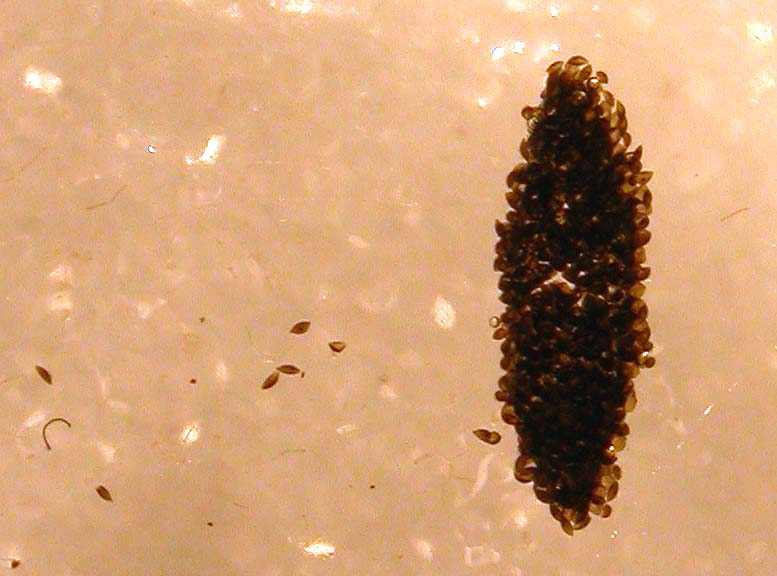
Mosquitoes are laying their eggs on the pond and I have already seen some of the jerky little larvae in the water. The eggs drift on the meniscus, neatly organised legions crowded into rafts like floating islands of brown velvet.

Tuesday, May 16, 2006

First flowers


The plant I thought was groundsel, Senecio vulgaris, has indeed proved to be so and, though still very small, has produced a flower.

Growing, as it is, in a rich compost, I am surprised that it is not much larger, but maybe it is aiming to get some seeds away as soon as possible. Groundsel is not common in our garden and I cannot remember seeing any for years so, as in the case of Surtsey island, it is not the closest plants that are the first colonists of the windowbox.

Sunday, May 07, 2006

Maple growing


The seedling that shows every sign of being a Japanese maple of some description has expanded its first two true leaves and they have arched backwards and crossed while their tips almost touch the soil. I thought the seedling might be from our old Japanese maple growing nearby, but this has different leaves so I shall have to let it develop a bit before attempting to identify it (though, as a seedling, I expect it will be a unique clone - Acer 'Windowbox')

Tuesday, May 02, 2006

Dimorphic midges


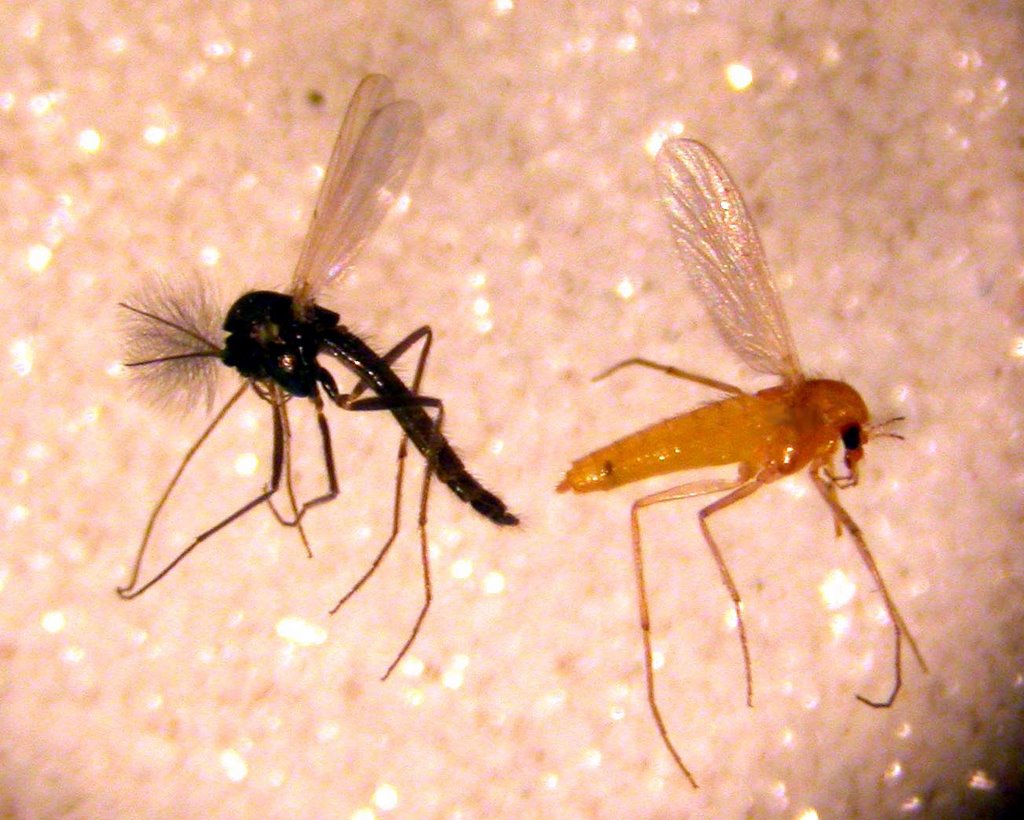
I found a midge floating dead on the small Wbx pond today and it turned out to be a rather battered specimen of Bryophaenocladius xanthogyne. This is a terrestrial-breeding species which has a remarkable sexual dimorphism, the male being almost completely black and the female wholly yellow. It is not uncommon here at this time of year and the picture shows a pair I found a few years back.

Saturday, April 29, 2006

Devil's claw?


The large seedling is now starting to develop its first true leaves and they look very much like some form of Japanese maple. The seed possibly came from the tree in our garden that grows nearby, but maybe not and, if it did, I am not sure how it would have been buried. Anyway, it looks very healthy and may develop into something quite interesting.

Friday, April 28, 2006

Premature bud


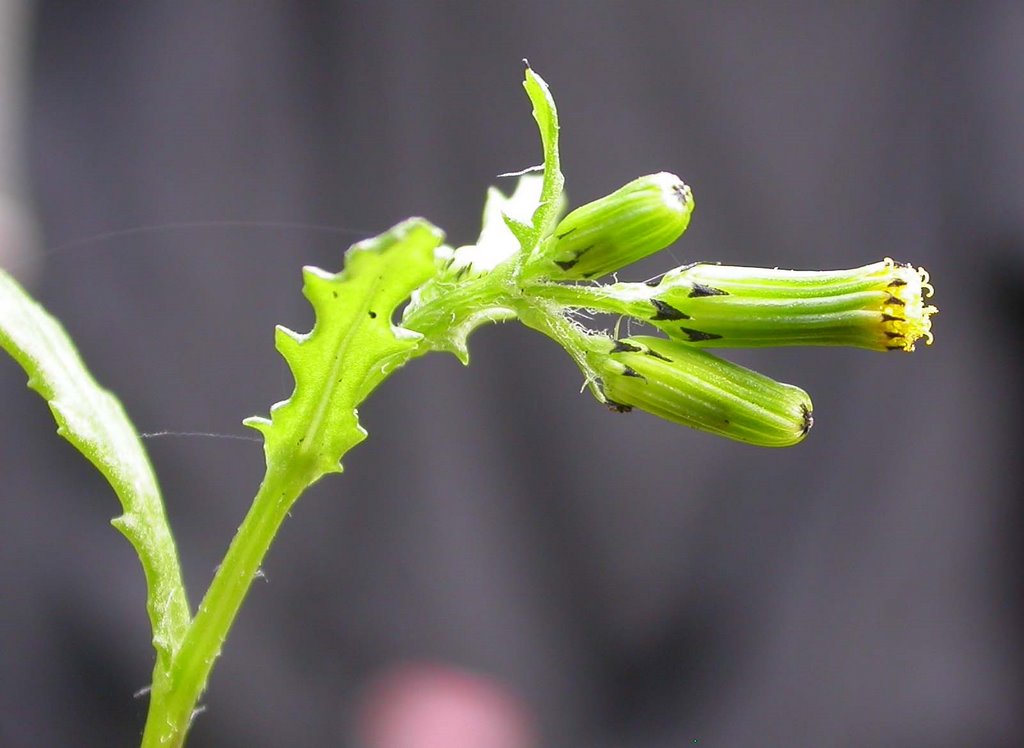
Although it is only about one centimetre tall, the seedling that I think may be groundsel, has produced a flower bud. This is very fast work for something that only germinated on 1 February this year, 87 days ago. It remains to be seen whether the plant will grow taller or will call it a day once seed is set.

The black-tipped outer bracts are characteristic of groundsel, so it looks as though my early determination was right.

Wednesday, April 26, 2006

Hazel shell halves


There were two halves of a hazel nut lying on WBX today split, I suppose, by a grey squirrel. I was reminded of Julian of Norwich's famous words:

"And so in this syght y sawe sothely that he ys alle thynge that ys goode as to myne undyrstandynge and in this he schewyd me alyttille thynge the qwantyte of A haselle Nutte lyggande in the palme of my hande & to my undyrstandynge that it was as rownde as any balle. I lokede þeropoun and thought whate maye this be and I was aunswerde generaly thus it is alle that ys made."

As the picture shows, my hazel shell is round and could pass, if not for Earth, then for some distant planet round a distant sun. It has an astronomical cast about it.

Sunday, April 23, 2006

Largest seedling


The large seedling that I thought might be an ash tree appears to be something else, though it is still too early to tell what. The leaves are a rather olive green and the bud in the centre is red, not typical of an ash. I think it might be an exotic.

Seedlings appear almost every day now and by the end of the year I should have a fairly fully vegetated window box with a surprising variety of species - gardening by serendipity.

Monday, April 17, 2006

What are they?


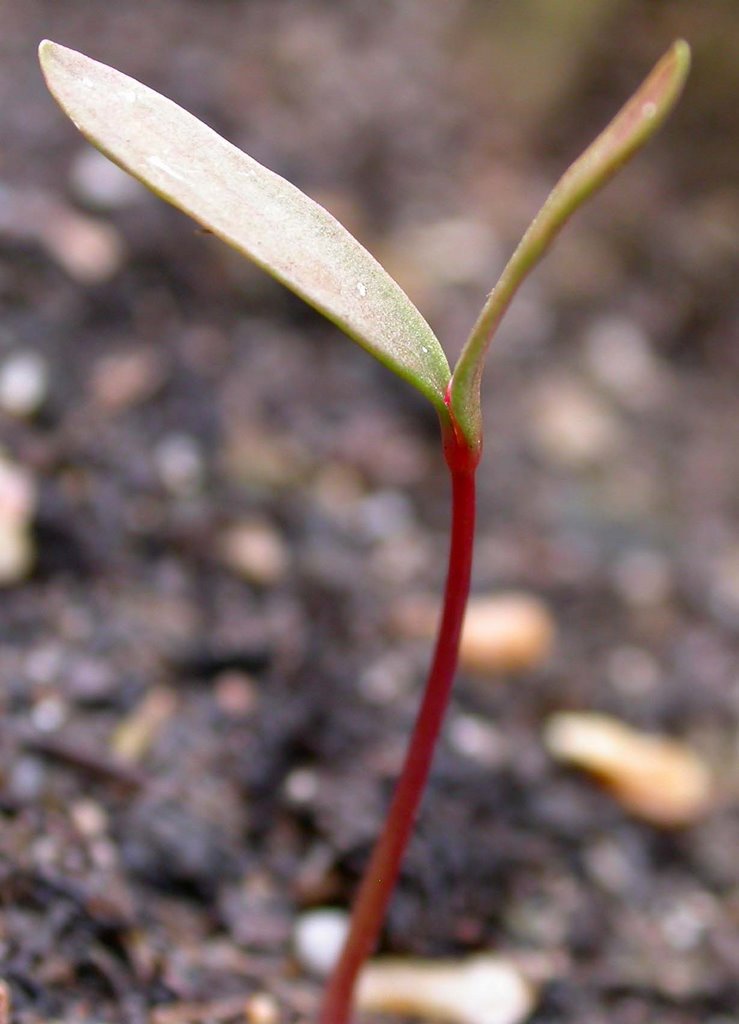
As the seedlings develop I begin to get some inkling of what they might be. The first to germinate last autumn (lowerpicture) has produced a trifoliate second true leaf and it reminds me of one of the trefoils or clovers. The second up has further slightly serrated leaves and may be groundsel.

More seedlings now appear almost every day and the large specimen spotted recently has now pulled its long cotyledons out of the earth and might be an ash tree - rather too large for a window box!

Saturday, April 15, 2006

More seedlings and a fly

A seedling larger than any I have yet seen is coming up to the south of the sallow log. There is another different seedling about the same distance to the north. So far there are at least five surviving plant species in WBX, though I have not yet been able to name any.

Yesterday morning a sallow woodfly, an Egle species, probably E. minuta was settled on North Rim. I can identify these without catching them because I am very familiar with them, though it is impossible to distinguish E. minuta from E. lyneborgi without dissection.

Saturday, April 08, 2006

...and more seedlings

Several minute seedlings have appeared behind and to the south of the sallow log, bringing the total number for WBX up to seven. I wonder if these newcomers might be heathers the seeds of which could have survived in the John Innes soil, or (more likely) pearlwort, Sagina procumbens.

It is cold again and nothing grows very quickly, so it will be some time before I find out.

Saturday, April 01, 2006

A third seedling

A tiny new seedling has appeared behind the sallow log, that is on the eastern side of WBX. I have also discovered what looks like some developing moss on a clod of earth (all the other bits of moss identified over the winter seem to have gone).